Bucket with Film YeastYeast versus Mold: Yeast is the smooth white and mold is the fuzzy green/blackMold on top of Cider If you’ve read many of my articles, you know I often answer questions with “it depends”. However, that doesn’t mean we can’t define practices that are generally helpful and will not create problems when … Continue reading Cider Rules: Oxygen
Tag: Oxygen
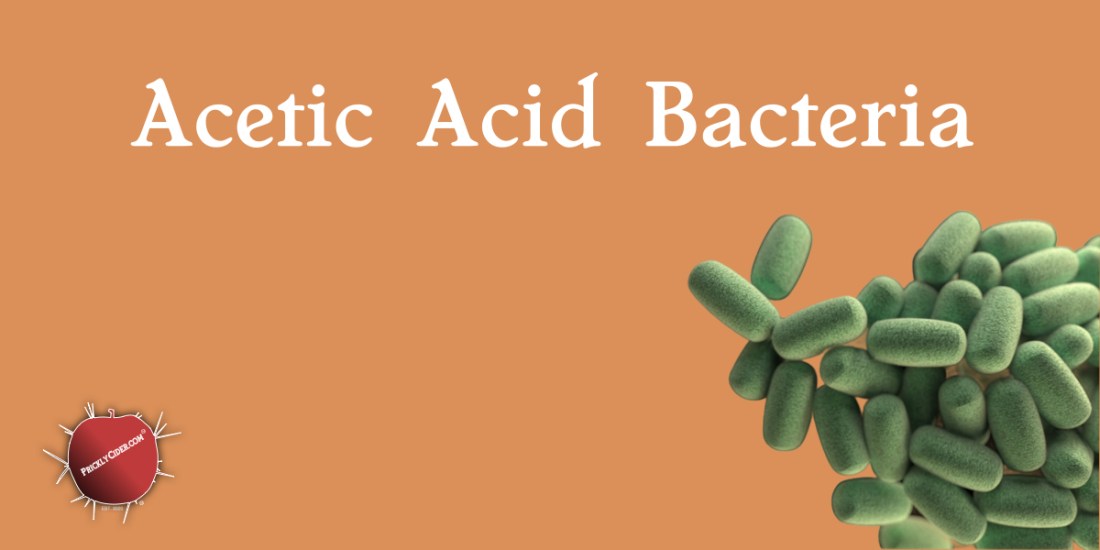
The Overview: Acetic Acid Bacteria
Acetic acid is generally considered one of the most undesirable compounds found in cider. In very small doses, it can have a positive impact but in general, it is something you should try to avoid because of the vinegary aroma and taste it can produce. You might think that the most common producer of acetic … Continue reading The Overview: Acetic Acid Bacteria
Volatile Acidity Versus Vinegar
Languages often have multiple words that can mean the same thing. They also have words that can mean many different things depending on the context or situation in which they are used. Saying it is chilly, cool, or brisk this morning basically means the same thing. You might want a jacket. The temperature is low. … Continue reading Volatile Acidity Versus Vinegar
Cider Question: What is racking and why is it performed?
Racking is a term used quite often by cider makers. It simply means to siphon off the clearer juice or cider from the sediment or lees that accumulate on the bottom of the container. The origin may be related to the old French word arracar, which meant to drain. A racking cane or tube is … Continue reading Cider Question: What is racking and why is it performed?
Cider Words: Polymerization
Tannin Polymerization Polymerization can be a key part of the aging process for cider. It is a chemical process in which the tannins found in the cider combine to form larger and more complex molecules. This process is enabled by oxygen through oxidative coupling. Tannins are found at higher concentrations in apples known as bitters, … Continue reading Cider Words: Polymerization
Cider Question: Do I need to use Campden (sulfite)?
The simple answer is “no”. Campden, potassium metabisulfite, sulfite, sulphite, or whatever name or compound you use, it is not needed. This is especially true if you are unsure why you are adding it. As a general rule, if you don’t understand why you are adding something to your cider, don’t add it. This is … Continue reading Cider Question: Do I need to use Campden (sulfite)?
Cider Question: Can hard cider go bad?
When people ask if their hard cider can go bad, they are often worried that it might spoil or turn into something that would make them ill. Usually, the cider in question is often sitting in a bucket and has a crust of white or even a moldy film or layer on top of it. … Continue reading Cider Question: Can hard cider go bad?
Cider and Oxygen
Oxygen, it’s the dreaded enemy of hard cider makers around the world. Or, is it? I’ve written about how you should avoid oxygen in your cider making process. I am also prone to say that the answer to many cider related questions is simply: it depends. Ultimately, oxygen is no different. Oxygen exposure during your … Continue reading Cider and Oxygen
The Headspace Conundrum
Headspace is the amount of air or open space you have in your container above the liquid. A common question when making cider is how much headspace should you have in your fermenter for primary fermentation? The next question is usually how much you should have when aging your hard cider. There are several considerations … Continue reading The Headspace Conundrum
Making Cider with a Juicer
As I’ve noted in an earlier article on pressing apples, there are a lot of methods and equipment you can purchase or make to press apples into juice. If you have quite a few full-sized trees in the backyard producing thousands of pounds (500+ kg) of fruit, a larger grinder and press system is probably … Continue reading Making Cider with a Juicer