Acetic acid is generally considered one of the most undesirable compounds found in cider. In very small doses, it can have a positive impact but in general, it is something you should try to avoid because of the vinegary aroma and taste it can produce. You might think that the most common producer of acetic acid in hard cider is acetic acidic bacteria. The reality is that the most common producers of acetic acid bacteria in cider are yeast and lactic acid bacteria.
It’s not that acetic acid bacteria isn’t found in ciders. Even sulfite (Campden) does not really kill or inhibit it. For example, researchers have found active acetic acid bacteria even when free SO2 was as high as 30mg per liter(1). What really prevents acetic acid bacteria from being active is the lack of oxygen. Unlike lactic acid bacteria, acetic acid bacteria can’t reproduce in an anaerobic environment. They don’t sporulate like yeast can. As noted in my article on volatile acidity and vinegar, this is why most of the acetic acid you find in cider doesn’t come from acetic acid bacteria. It is more often generated by lactic acid bacteria or yeast, usually in the range of 0.3-0.5 grams per liter(1). Having over 0.7 grams per liter, is usually a sign that acetic acid bacteria was active and that your cider was exposed to oxygen.
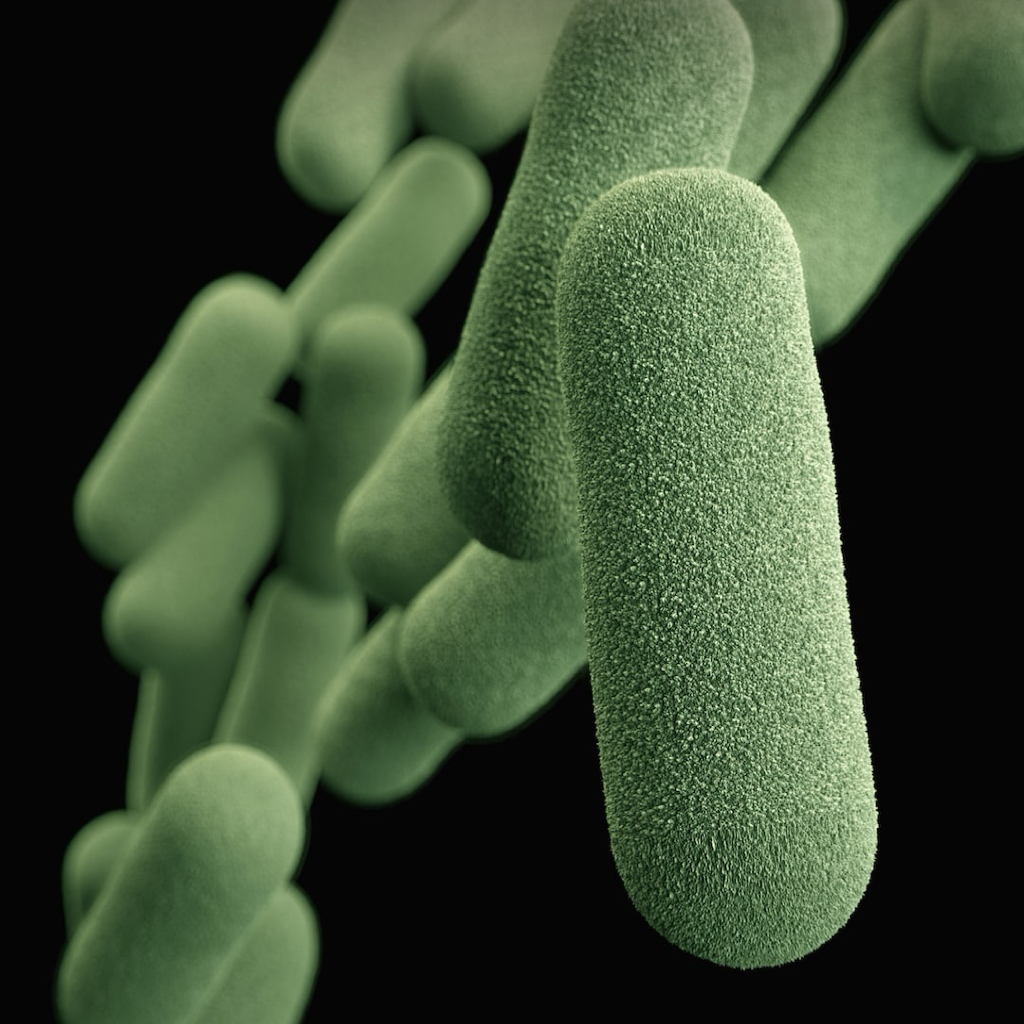
Acetic acid bacteria is generally rod-like or ellipsoidal in shape. They are gram-negative while lactic acid bacteria is gram-positive. The Acetobacteraceae family of acetic acid bacteria contain between 2-6 genera as technology has allowed researchers a better means to classify the strains. This is similar to yeast and is related to our ability to map the genetic DNA of organisms versus just classifying them based on physical or performance characteristics. In wine and cider, the two most common genera are Acetobacter and Gluconobacter. The additional four genera are Gluconoacetobacter, Acidomonas, Asai, and Kozakia. Strains most commonly found in wine, and should be in cider, is Gluconobacter oxydans, Acetobacter aceti, and Acetobacter pasteurianus.
One of the biggest difference between Acetobacter and Gluconobacter is their preference for energy sources. Acetobacter’s preference is generally ethanol, glycerol, and then lactate. Gluconobacter preference is generally mannitol, sorbitol, glycerol, fructose, and then glucose. Given its preference for using ethanol, Acetobacter is usually more tolerant of ethanol and more commonly found in wine. It’s interesting that like yeast, acetic acid bacteria is capable of adapting its tolerance to ethanol if it is grown within an ethanol rich environment. This most likely accounts for why Gluconobacter strains are still found in wine with higher %ABV. Acetic acid bacteria normally breaks down ethanol by first converting it to ethanal and then processing it into acetic acid.
Acetic acid bacteria is a natural organism that will always be found in cider. It is found on the fruit and damaged fruit will usually contain higher populations of it. Also, your equipment, just like yeast, can elevate the amount of acidic acetic present in your cider. This is why healthy fruit and food sanitation practices are important to help reduce the production of acetic acid as it minimizes the population. Higher pH and temperatures also encourage the growth of acetic acid bacteria. Even sulfites or free SO2 won’t have much of an impact on acetic acid bacteria. It will always be present. Ultimately, the way to control acetic acid bacteria growth is to avoid oxygen. Most other treatments are temporary or ineffective at best.
(1) P. Ribereau-Gayon and associates, Handbook of Enology Volume 1, The Microbiology of Wine and Vinifications 2nd Edition, Chapter 7, John Wiley & Sons, Ltd, 2006 ISBN: 0-470-01034-7