Cider Adventures: Brittany France

Cider Adventure - Vannes, France

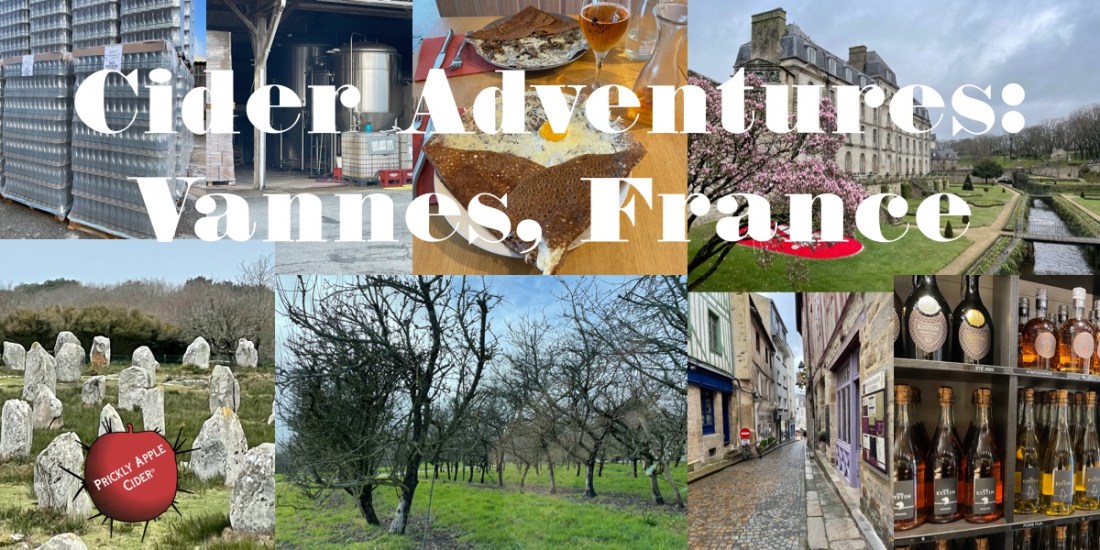
If you are a cider and apple geek like me, your vacations might often turn into cider adventures. No matter where I go, I am always seeking new ciders and apples to try. My wife thought we were going to Highclere for a valentine’s tea. The reality was because it was on the way to … Continue reading Cider Adventures: Brittany France

Cider Words: Enzymes

Mālus Trivium Page Top

Enzymes commonly found in cider and perry. Enzymes are proteins that act as catalyst for chemical reactions. In cider making, they can enable or speed up these reactions. This enzymes can improve clarification, increase juice yield, extract color, enhance aroma and flavor, and stabilize your cider(1). They can also improve the nutritional characteristics of foods … Continue reading Cider Words: Enzymes

Making Nuts! Cider

Nuts! Cider: A cider aged on walnuts.

Nuts! Cider Recipe: A cider aged on walnuts. This recipe started several years ago when I learned how astringent walnuts are. Go put a raw, unsalted walnut in your mouth and slowly chew it. Chew it for a good 30 seconds if you can. Have some water handy in case you choke. That experience led … Continue reading Making Nuts! Cider

Cider Words: Polymerization

Mālus Trivium Page Top

Tannin Polymerization Polymerization can be a key part of the aging process for cider. It is a chemical process in which the tannins found in the cider combine to form larger and more complex molecules. This process is enabled by oxygen through oxidative coupling. Tannins are found at higher concentrations in apples known as bitters, … Continue reading Cider Words: Polymerization

Cider Equipment: Fermentation

Equipment for fermenting cider

I have the pleasure of interacting with people from all over the world and at all levels of cider making experience. But, no matter how many books and research papers papers I read, apples I assess, yeasts I trial, or experiments I conduct, I am fundamentally just a home craft cider maker. When I write … Continue reading Cider Equipment: Fermentation

Cider Question: Do you need to use pectic enzyme?

Cider Question: Do you need to use pectic enzyme?

Pectic enzymes or what are also referred to a pectinases, are enzyme compounds that cleave or breakdown the natural pectin found in both apples and pears. Generally, pears have higher levels of natural pectin. Pectic enzymes are often produced naturally during fermentation by yeast, but as is common, the amount will vary by yeast strain. … Continue reading Cider Question: Do you need to use pectic enzyme?

Pizza and Cider: Tropical Heat

Pizza and Cider: Tropical Heat

Servings: 10-12 Inch Pizza I continue to expand my pizza dough style in ways similar to how I adapt my ciders, which means adjuncts. Adding adjuncts is a great way to create balance in hard cider, especially when all you have are eating and cooking apples (Sweets and Sharps). It also provide a ways to … Continue reading Pizza and Cider: Tropical Heat

Cider Question: How to make sweet hard cider?

How to make cider sweet

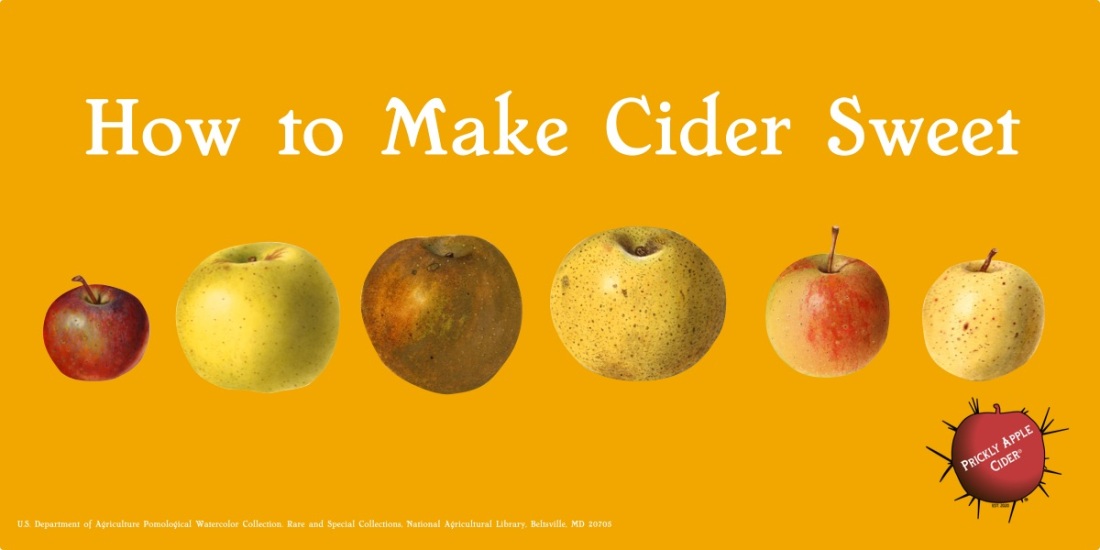
Cider or what some call hard cider is normally dry, which means it has little to no sugar remaining. This is because apple juice has about half the sugar that grape juice has and is often made with yeast (Saccharomyces cerevisiae) used for wine. The result is that when fermentation completes, you are likely to … Continue reading Cider Question: How to make sweet hard cider?

Non-Saccharomyces Yeast: Inoculating for Control

Non-Saccharomyces Inoculating

This is the third article in my series on non-Saccharomyces yeast. Initially, I reviewed the concept that the yeast commonly used for wine and beer, Saccharomyces cerevisiae, is not ideal for cider and could be considered a spoilage yeast. I proposed that most Saccharomyces cerevisiae yeast lack the properties critical for creating the essence of … Continue reading Non-Saccharomyces Yeast: Inoculating for Control

Cider Question: How to measure %ABV?

What’s the best way to estimate the %ABV of cider?

The simple answer to how you measure the percent alcohol by volume (%ABV) of your cider is that you subtract your final specific gravity (FG) from your original specific gravity (OG) and multiple this number by 128. The best equation for calculating hard cider %ABV If you’ve read some of my other articles, you probably … Continue reading Cider Question: How to measure %ABV?