Salmon Tacos and Hard Cider

Salmon Taco Fiesta

I have yet to find a food that doesn’t pair well with hard cider. That is often because you can have so many different styles of cider. However, I always enjoy cider with seafood. I have written several other articles about seafood and cider. just search the website or review the experiences page for more. … Continue reading Salmon Tacos and Hard Cider

Cider and Maceration

Mālus Trivium Page Top

Maceration and it’s impacts on cider making. The definition of maceration is to soften or separate. With regards to apples and pears, this process occurs after the apples have been milled or crushed but before the pomace is pressed. One of its key goals is to break down the pectin found in the fruit. This … Continue reading Cider and Maceration

Yeast Starter for Cider

The materials and steps to make a yeast starter for cider.

A yeast starter is used to increase the biomass of a yeast and to ensure the yeast cells are healthy and ready to ferment. It is how you grow more yeast cells to ensure you have enough for a robust ferment and to ensure the yeast cells you are using are healthy and full of … Continue reading Yeast Starter for Cider

Cider Words: Autophagy

Mālus Trivium Page Top

Autophagy: The process where yeast begin consuming themselves in order to stay alive during times of starvation. Have you ever heard of autophagy before? No? Don’t worry, I had never heard about it until I read chapter two of Molecular Wine Microbiology(1). Autophagy is strongly linked to autolysis, which I covered in an earlier Mālus … Continue reading Cider Words: Autophagy

Yeast Propagation for Cider

Propagating Yeast for Cider

Whether you use commercial yeast or wild yeast, you really should be thinking about yeast propagation. Yeast propagation is the process of taking a small yeast sample, usually from a plate or slant and growing it until you have enough to pitch into your juice to make cider. You might be thinking, that sounds like … Continue reading Yeast Propagation for Cider

Cider Words: Autolysis

Mālus Trivium Page Top

Autolysis: The decomposition of yeast cells. Why does the flavor of cider change when it ages? Part of those changes can come from bacteria or yeast. This micro flora can make malolactic fermentation (MLF) occur or a souring by Brettanomyces yeasts. However, one of the biggest impacts can come from the yeast that fermented your … Continue reading Cider Words: Autolysis

Nutrient Deprivation: Keeving

The Keeving Process

Keeving is a process that seeks to remove nutrients needed for fermentation in order to create residual sweetness. Yeast need nutrients and vitamins to ferment and while they are good at finding or creating many of these nutrients, it only takes the loss of one to stop the process. Keeving is a process that removes … Continue reading Nutrient Deprivation: Keeving

Microwave Extraction

Mālus Trivium Page Top

Using a microwave to extract fruit juice - Modified extraction graph for grapes from A. Cendres(1) How should you process your apples to make juice? Do you mill and then press them? Do you even need to press them? A. Censures and associates researched an interesting alternative for juice extraction: microwaves(1). Their research focused on … Continue reading Microwave Extraction

When are apples ripe?

When are apple ripe?

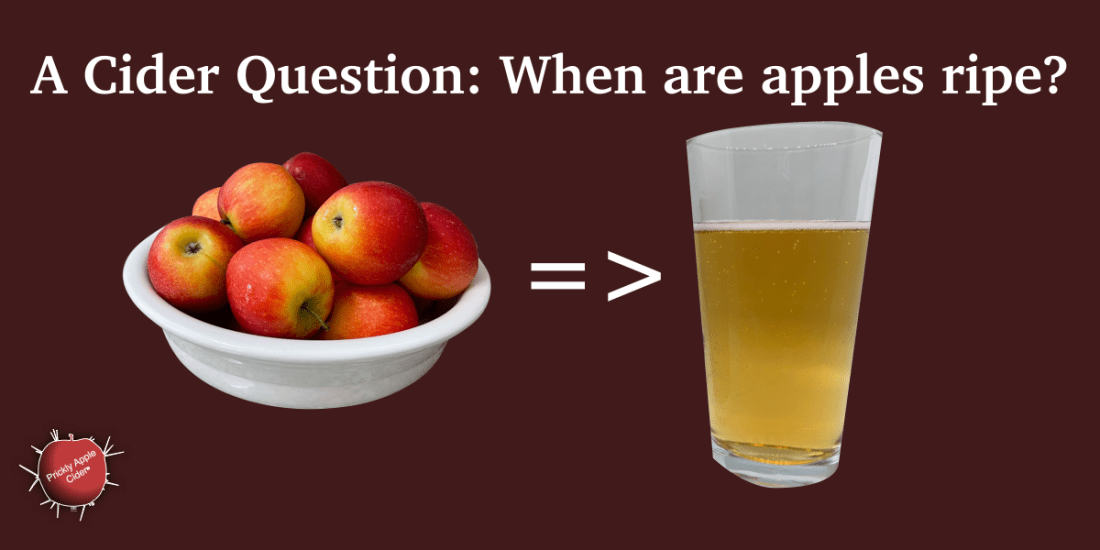
How do you know the apples you are using for hard cider are ripe? Maybe, you would ask me to define ripe. Is ripe defined by the ideal time to harvest an apple, to eat an apple, or to press an apple. We could even consider the question of ripeness for cooking apples. In my … Continue reading When are apples ripe?

Unique Apples: Red Fleshed Varieties

Mālus Trivium Page Top

Hidden Rose and Pink Pearl Apples - Two Red Flesh Varieties Have you ever eaten a red apple? Not red on the outside, but red on the inside. I must say that there is this appeal of biting into an apple and finding this pink or reddish colored flesh. Even when you know it’s there, … Continue reading Unique Apples: Red Fleshed Varieties