Do you have a packet of yeast where the expiration date has passed? Maybe you harvested some yeast from last season’s batch of hard cider but it has been sitting in the refrigerator ever since. Is this yeast dead and unusable or could it still be viable? The quick answer is that you can still use this yeast. You might have to revitalize it, but it is really hard to kill all the yeast cells unless you expose it to pasteurization. Yeast first go through a process called autophagy before finally dying and going through autolysis. So, to answer the question, you can use expired yeast, but it is best to revitalize it.
Dried yeast are very resilient, which is why they are packed the way they are. They are dormant from the lack of moisture. While they can lose viability as they age, the expiration date really reflects when that batch of yeast is probably no longer capable of inoculating the volume indicated on the packet. For example, it may no longer be able to support a 5 gallon (19l) batch of cider and now could only reach the inoculation rate in a 4.5 gallons (17l) batch. This is also true for yeast harvested from your last batch. The issue with harvested yeast is that sitting in a moist environment means the viability of this yeast will decline faster. Even storing the yeast in a cold environment, the yeast will settle and those on the bottom will be killed by those on the top. There will continue to be viable yeast present but the volume of viable yeast declines.
Normally, if you harvest your yeast from a batch of cider, you have enough yeast to fully inoculate at least double the volume of your previous batch. As it sits in storage, the viability will reduce, but it will take a long time for there to be no viable yeast cells. I have regularly used yeast that was harvested the previous season and sat in my refrigerator for over 9 months. The solution is to revitalize the yeast and make sure you are not under pitching, which means to add too few active yeasts given the batch volume. This is where a yeast starter can help.

Most dried packaged yeast recommend rehydration before inoculation. That is not the same thing as a yeast starter. Yeast suppliers recommend rehydrating dried yeast before pitching them into your juice. This helps reduce the shock to the yeast. Juice has high sugar levels, which is a stressful environment. Rehydration involves water to allow the yeast cells to absorb moisture and become active again. A starter involves placing the yeast in solution with some sugar, usually about 1.020-1.030 gravity, along with nutrients. This solution allows the yeast cells to absorb needed vitamins and minerals and strengthen cell walls but also start reproducing. Rehydration doesn’t involve any reproduction. It helps ensure the dried yeast are allowed to fill up in a non-stressful environment but doesn’t allow it to produce more mass. A starter allows it to do both. The low sugar will allow it to propagate and grow mass more easily. This means that you are revitalizing the cells that were still alive and producing new viable cells. With a starter, you help old cells recover while also rebuilding the biomass of yeast that may have died off during the long storage time.
Similar posts from PricklyCider.com about managing cider yeast.

Cider Words: Autolysis
Why does the flavor of cider change when it ages? Part of those changes can come from bacteria or yeast. This micro flora can make malolactic fermentation (MLF) occur or a souring by Brettanomyces yeasts.…
Cider Words: Autophagy
Have you ever heard of autophagy before? No? Don’t worry, I had never heard about it until I read chapter two of Molecular Wine Microbiology(1). Autophagy is strongly linked to autolysis, which I covered in…
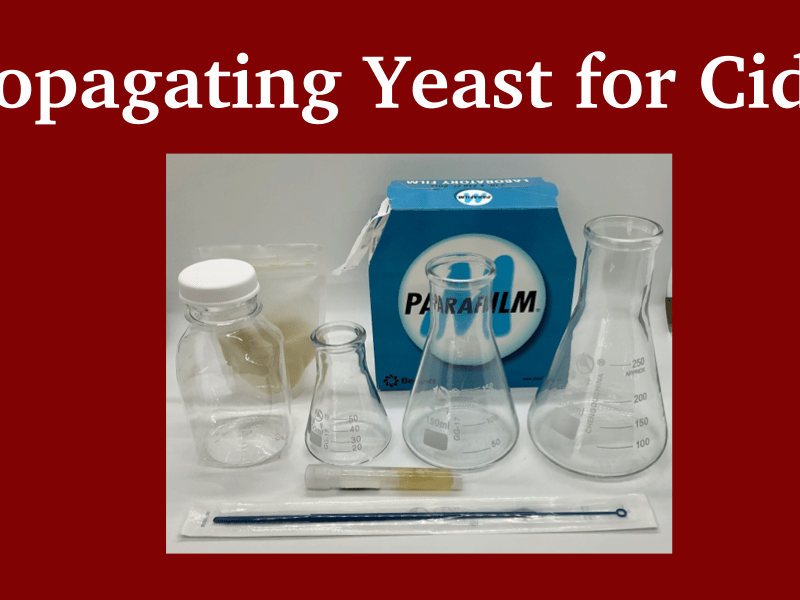
Yeast Propagation for Cider
Whether you use commercial yeast or wild yeast, you really should be thinking about yeast propagation. Yeast propagation is the process of taking a small yeast sample, usually from a plate or slant and growing…

The Art & Science of Cider
A Book on Making and Enjoying Cider I’ve always been a hands-on person with a passion for creating things. That passion has manifested itself in hard cider, not apple juice, but the fermented drink of…
Did you enjoy this article? Don’t miss future posts from PricklyCider.com by following us today! PricklyCider.com is your source for all things cider.
 PricklyCider.com