I was able to assess three Hanseniaspora uvarum yeast strains from the USDA culture collection for use in cider making. I provided a detailed overview on these and other non-Saccharomyces strains in earlier articles. Just search for non-Saccharomyces on the site or look in the post carousal below for the links. Hanseniaspora uvarum is a … Continue reading Non-Saccharomyces Yeast: Hanseniaspora uvarum Results
Tag: yeast
The Essence of Cider
As you relax on your patio enjoying one of your home crafted ciders, have you ever started pondering what really creates it. The taste and ultimately, the quality is determined by the numerous compounds found in your cider. These can include esters, fusel alcohols, acids, and a multitude of others. It’s these compounds that define … Continue reading The Essence of Cider
Non-Saccharomyces Yeast: Lachancea thermotolarens Results
I tested 3 samples of the strain Lachancea thermotolarens from the USDA last year. Lachancea thermotolarens is a very interesting yeast and I suggest reading my overview if you want to explore it in more detail. I also explored Pichia kluyveri, Candida zemplinina, and Hanseniaspora uvarum. Just search non-Saccharomyces on the site or look for … Continue reading Non-Saccharomyces Yeast: Lachancea thermotolarens Results
Non-Saccharomyces Yeast: Pichia Kluyveri Results
I obtained 11 samples of non-Saccharomyces yeast from the USDA and have been conducting trials for my hard cider batches. Three of those strains where Pichia kluyveri. If you haven't read it, I would encourage you to review my overview of Pichia kluyveri and the other strains. Just search non-Saccharomyces on the site or look … Continue reading Non-Saccharomyces Yeast: Pichia Kluyveri Results
Cider Question: Does my cider look okay?
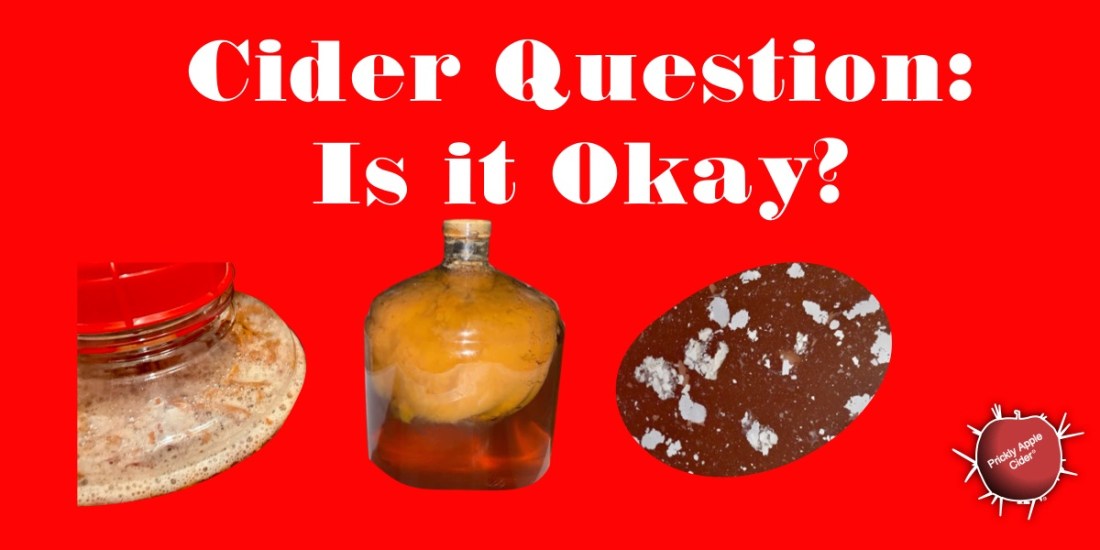
The simple question about whether someone’s hard cider looks okay usually occurs during two specific times. The first is during fermentation when yeast form what can be called a krausen or a white or brown yeast cap. The second time is after fermentation has completed and the cider is aging or maturing. During the aging … Continue reading Cider Question: Does my cider look okay?
Cider Yeast: Classifications
Scientifically, yeast are identified by a classification methodology. They are part of the fungi kingdom and they will have different families and orders(1). For alcoholic beverages makers, like hard cider makers, we usually focus and talk about three classifications for yeast. The first and highest level is the genus. Saccharomyces is a genus of yeast. … Continue reading Cider Yeast: Classifications
Cider Words: Yeast Regulation
Yeast Regulation: Upregulating and Downregulating Yeast are single cell organisms that are seeking to survive and thrive in whatever environment they find themselves. As a single cell organism, we might be inclined to think of them as simple but, that would be a mistake. Yeast have a vast amount of processes they perform to live … Continue reading Cider Words: Yeast Regulation
Cider Fundamentals: Sugar
Sugar is a fundamental element of making hard cider. Without sugar, yeast couldn’t ferment juice and produce ethanol so we wouldn’t have cider. We also wouldn’t have vinegar because vinegar is formed from the ethanol produced by the sugar. Isn’t it interesting how a single simple compound can have such a dramatic impact on human … Continue reading Cider Fundamentals: Sugar
Cider Words: Yeast Morphology
Yeast Morphology: Common Yeast Shapes Morphology simply means the form or structure of a plant or organism. Yeast morphology in this context is the shape of yeast cells. You may be surprised to learn that not all yeast cells are shaped the same. As a cider maker, if you assess your yeast under a microscope, … Continue reading Cider Words: Yeast Morphology
Aroma Faults: Solvent
Cider Aroma Faults - Solvent or Vinegar Some compounds contribute positively, initially. But, if there is too much, they quickly become faults. Ethyl acetate (C5H8O2) is an example of such a compound. In low quantities, it can contribute to the aroma of a cider but in large quantities, it becomes a fault. It will turn … Continue reading Aroma Faults: Solvent