Cider Question: Can hard cider go bad?

Bad Cider

When people ask if their hard cider can go bad, they are often worried that it might spoil or turn into something that would make them ill. Usually, the cider in question is often sitting in a bucket and has a crust of white or even a moldy film or layer on top of it. … Continue reading Cider Question: Can hard cider go bad?

Non-Saccharomyces Yeast: Hanseniaspora uvarum Results

Hanseniaspora uvarum Test Results

I was able to assess three Hanseniaspora uvarum yeast strains from the USDA culture collection for use in cider making. I provided a detailed overview on these and other non-Saccharomyces strains in earlier articles. Just search for non-Saccharomyces on the site or look in the post carousal below for the links. Hanseniaspora uvarum is a … Continue reading Non-Saccharomyces Yeast: Hanseniaspora uvarum Results

Cider Question: Do I need to use yeast nutrient?

The Need for Yeast Nutrient in Cider

Many cider recipes call for the addition of yeast nutrient when adding yeast. Do you really need to add yeast nutrient to make cider? The short answer is no but, as you might expect, there are always details and nuances involved when answering most questions about cider. The need for yeast nutrient is usually a … Continue reading Cider Question: Do I need to use yeast nutrient?

Malolactic Fermentation and Citric Acid

Understanding the impact of Malolactic Fermentation to Citric Acid

Malolactic Fermentation or what is often referred to simply as MLF, is the process where lactic acid bacteria converts malic acid to lactic acid. For cider makers, MLF can be a very important process because apples are high in malic acid. As a result, MLF can reduce the acidity found in hard cider made from … Continue reading Malolactic Fermentation and Citric Acid

Cider Question: Can I use culinary and eating apples to make cider?

Using Culinary Apples for Cider

I don’t have classic cider apples growing around me. I have found some wonderful American heirloom varieties but, even those aren’t considered true cider apples. Most people have access to a wonderful range of cooking apples like Granny Smith and Bramley or eating apples like Red Delicious, Fuji, and Gala. Unless you live in certain … Continue reading Cider Question: Can I use culinary and eating apples to make cider?

Cider Question: How can I encourage Malolactic Fermentation (MLF)?

How to encourage MLF

Malolactic fermentation (MLF) is a process that usually occurs after primary or alcoholic fermentation completes. Fundamentally, it’s the conversion of malic acid to lactic acid. Malic acid is more acidic compared to lactic acid so MLF reduces the acidity of your cider. Other reactions that impact aroma also occur. Diacetyl creation is one of the … Continue reading Cider Question: How can I encourage Malolactic Fermentation (MLF)?

Non-Saccharomyces Yeast: Lachancea thermotolarens Results

Cider Making Results Using Lachancea thermotolarens

I tested 3 samples of the strain Lachancea thermotolarens from the USDA last year. Lachancea thermotolarens is a very interesting yeast and I suggest reading my overview if you want to explore it in more detail. I also explored Pichia kluyveri, Candida zemplinina, and Hanseniaspora uvarum. Just search non-Saccharomyces on the site or look for … Continue reading Non-Saccharomyces Yeast: Lachancea thermotolarens Results

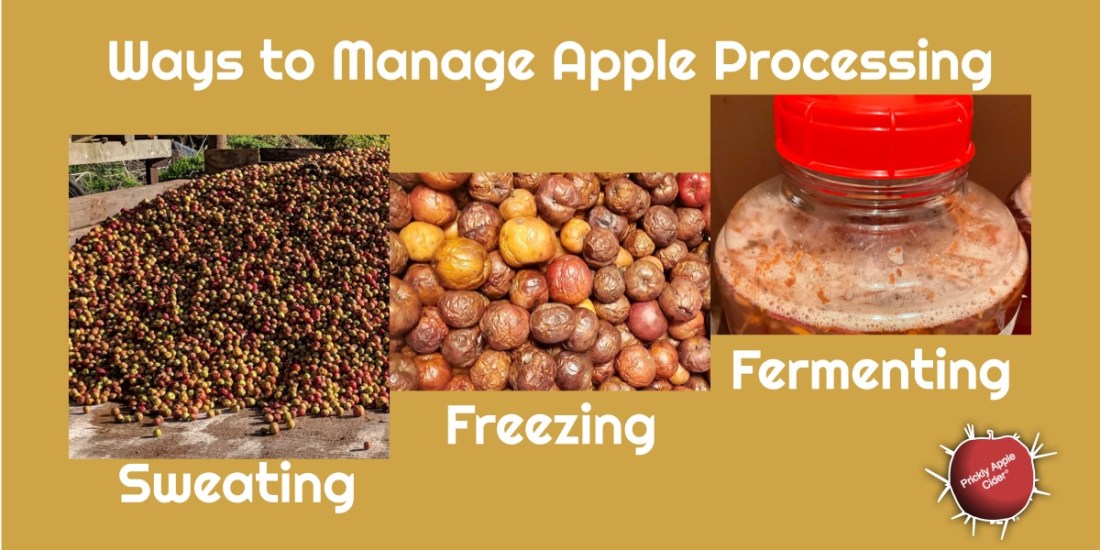
Cider Question: How can I delay processing my apples?

Delay Apple Rocessing

Things happen and you aren’t always able to process all the apples you need to fill your fermenter. For example, not all apples ripen at the same time. In fact, a single tree may take weeks to ripen all the apples on it. Maybe your grinder or press broke or you picked more apples than … Continue reading Cider Question: How can I delay processing my apples?

Non-Saccharomyces Yeast: Pichia Kluyveri Results

Results of cider making using Pichia kluyveri yeast.

I obtained 11 samples of non-Saccharomyces yeast from the USDA and have been conducting trials for my hard cider batches. Three of those strains where Pichia kluyveri. If you haven't read it, I would encourage you to review my overview of Pichia kluyveri and the other strains. Just search non-Saccharomyces on the site or look … Continue reading Non-Saccharomyces Yeast: Pichia Kluyveri Results

Cider Yeast: Classifications

Yeast Classification

Scientifically, yeast are identified by a classification methodology. They are part of the fungi kingdom and they will have different families and orders(1). For alcoholic beverages makers, like hard cider makers, we usually focus and talk about three classifications for yeast. The first and highest level is the genus. Saccharomyces is a genus of yeast. … Continue reading Cider Yeast: Classifications