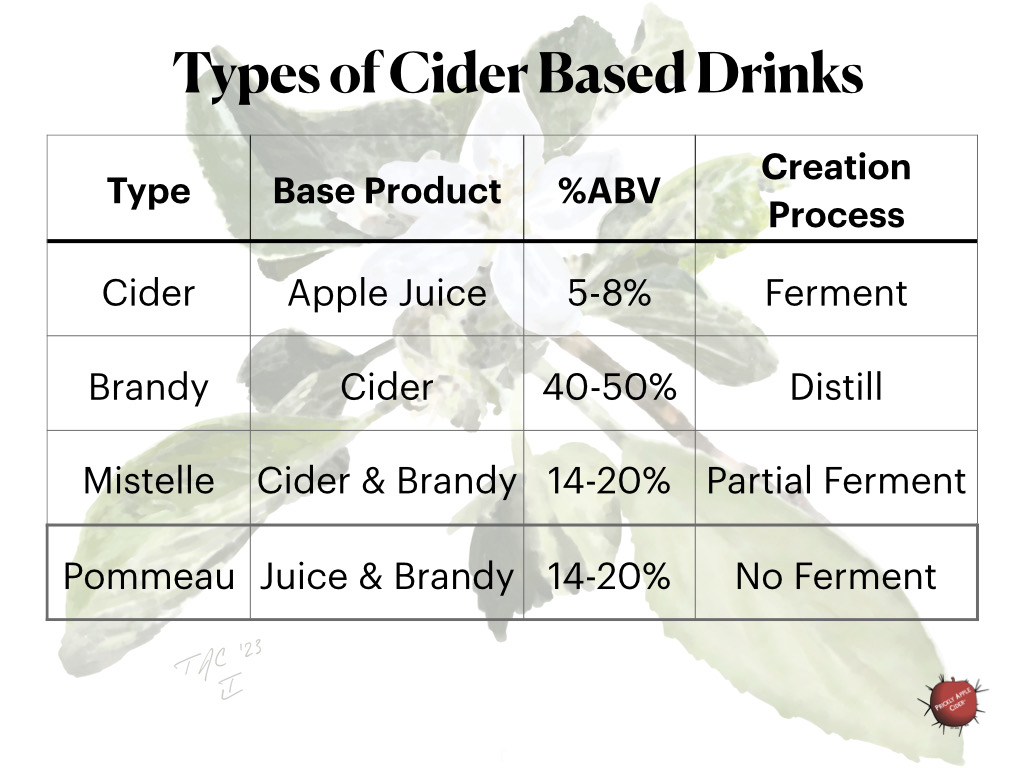
Just like wine, you can distill cider into a spirit. Please recognize that this process is illegal in many countries without a specific license. This is because it can be dangerous. One reason is because of the method, heating a flammable liquid, often over an open flame, and the other is because you can concentrate toxic elements, like methanol, if you don’t understand the process. However, there is a long history of turning cider into a spirit in two countries. You may be surprised by one of those two countries, which is the United States of America. Our cider tradition all but died at the turn of the twentieth century, but the oldest distillery in the United States isn’t for making whiskey. It makes “cyder spirits” as referenced in a letter from George Washington. Laird & Company began distilling spirits in 1717 and had its first official commercial transaction in 1780. They even survived the US prohibition era by making non-alcoholic apple products until it was granted a license to product apple brandy again for medicinal purposes. Most Americans know this product as Applejack but it has other names. In France, which is the other country with a long history in distilling cider, it’s called calvados. At least if it is made in Normandy and Brittany and follows the traditional process.
How does this relate to pommeau? Pommeau is an apple based drink made by blending calvados (apple brandy) with apple juice and aging it. It’s common in Brittany and Normandy France, which are also where you find lots of cider and calvados. For me, it is similar to a cider mistelle, which is simply a cider that is blended with a spirit to arrest fermentation. This creates a fortified cider with some residual sweetness. You can find several cider mistelle recipes on my Recipe Page. Look for Ruby Reaper and Flora Dora for inspiration. The main difference between a pommeau and a mistelle is that with a pommeau, you are using juice and preventing fermentation by adding a spirit. The alcohol level is maintained above the level yeast can function. For a mistelle, the spirit is added to arrest in an active fermentation. You instantly make the cider have a level of alcohol that the yeast can no longer tolerate.
You could expect a higher sugar content in a pommeau, but it will depend on the ratio of spirit to juice that you use and the gravity of the juice. You age the pommeau to ensure it’s stable and allow additional flavors to develop. Most pommeau is aged at least 18 months. This is on top of the year or more that the spirit (calvados) is aged. This is a time intensive process, but it is also another interesting and relatively easy adaptation for home cider makers. Take your favorite bottle of calvados or other spirit and blend it on pressing day with some of your favorite juice. Put it alway with some oak or other adjuncts and you can plan to serve it for the year-end holidays of the next year. As you might expect, look for some new recipes on the page to get you inspired.
Do these words make you want to know more about how to make your own cider? Checkout some of the articles below or search recipes or methods on PricklyCider.com and find even more.


Don’t miss any future Mālus Trivium articles. Follow me and you will get a link to my latest article delivered to your inbox. It’s that easy!
 PricklyCider.com