If you are like me, you are interested in trying different apples but more importantly, you’re interested in cheap apples. Those may come from a backyard or roadside tree or even from an orchard. Often, they are damaged either from insects or weather, like hail. This inevitably leads to this week’s Cider Question about whether you can use apples with worm holes or other damage. The simple answer is yes. But, answers to questions about hard cider are rarely simple or straightforward. Let’s explain the impact damaged apples can have but why it can be okay to use them.
You may be concerned that damaged apples could harbor human pathogens, and they can (especially drops that are picked from the ground). You may also be worried that some insects in the apples might pass on a pathogen. Remember that insects are a vital part of many diets around the world so general consumption of insects isn’t a health issue like human pathogens from damage or insects could be. But, this isn’t why you add sulfites (sulphites) or what’s often called Campden to juice or cider. Campden doesn’t kill or inhibit human pathogens. It only impacts organisms that could impact flavor. What really keeps hard cider free of human pathogens is the ethanol created by fermentation and the acidity of cider.
Once your yeast processes enough sugar from the juice to create ethanol to around 2.5% alcohol by volume (a drop in specific gravity of around 0.020 or 20 points), your juice becomes cider and in a couple days, human pathogens will have been eliminated(2). The acidic nature of cider weakens the cell walls of human pathogens allowing the ethanol to penetrate and kill these pathogens. Cider is naturally safe because of the alcohol and acids. Other bacteria like Lactic Acid Bacteria (LAB) and acetic acid bacteria are more resilient and can survive. But, these bacteria impact flavor, not health. This means cider is naturally safe and part of why it doesn’t spoil. However, that doesn’t mean you would want to use any apple, regardless of its condition.
Example of apple with hail damage.

Example of Apple with insect damage.
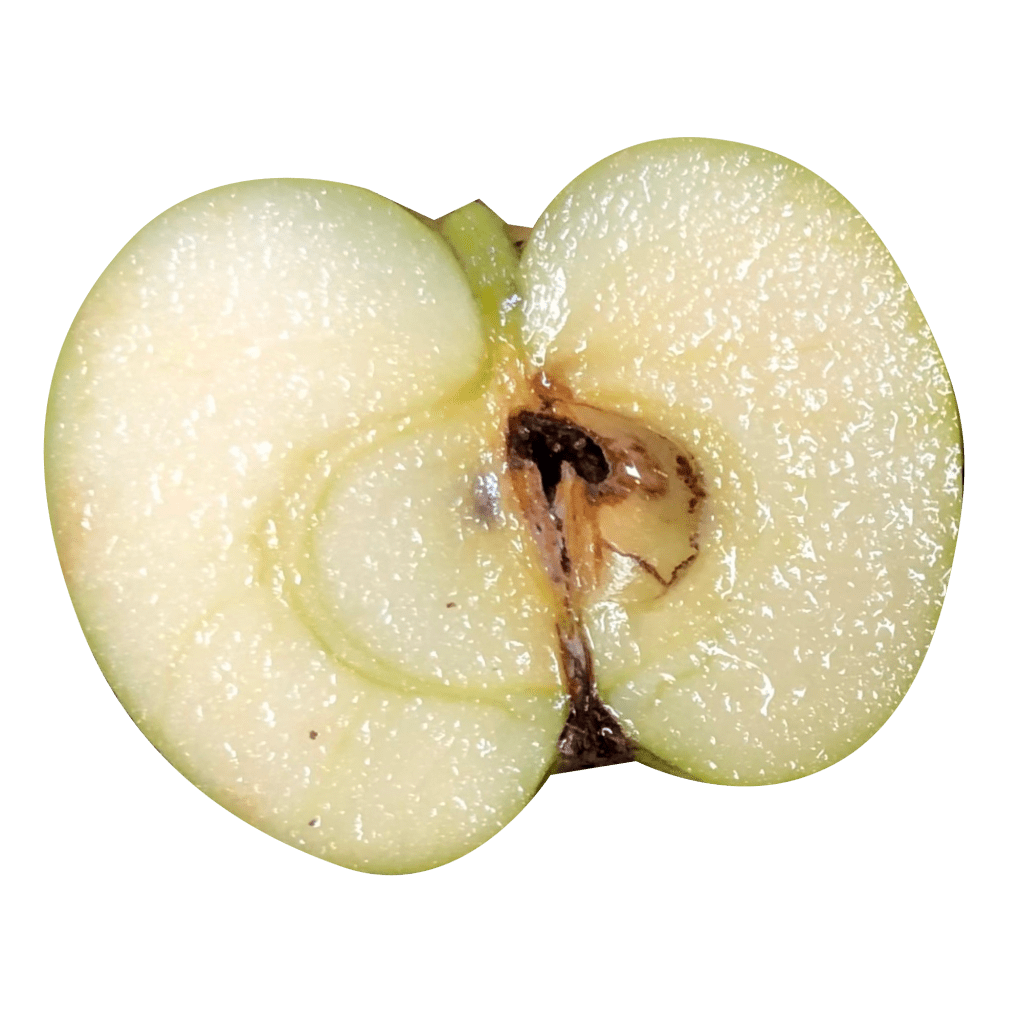
Damaged apples either from hail, falling, or insects will almost certainly carry higher levels of bacteria and undesirable yeast. These include lactic acid bacteria, acetic acid bacteria, and Brettanomyces species of yeast. These are the organisms in your micro flora that can create undesirable flavors. However, they aren’t human pathogens. In fact some can be probiotic or prebiotic. Many of these, but not all, are also susceptible to sulfites. This is where you need to assess your wallet and your taste buds. Free or cheap apples that are damaged usually win out for me and they go into the juicer worm holes and all. If you are worried about off flavors, you might consider using some Campden tablets. Instead, I usually focus on sanitation of my equipment, cleaning my apples, and limiting the exposure of my cider to oxygen, which is generally needed for most undesirable flavors to form.
Unlike juice, which could harbor some human pathogen, hard cider has a naturally occurring purifier, ethanol, that is also aided by another naturally occurring compound, acids. This makes cider production a very forgiving process when it comes to ensuring a product free of human pathogens, even when suspect fruit is utilized.
(1) Menz, G., Alfred, P., and Vriesekoop, F. 2011. Growth and Survival of Foodborne Pathogens in Beer. J. Food Prot. 74:1670-1675.
Don’t miss any future answers to Cider Questions. Follow me and you will get a link to my latest article delivered to your inbox. It’s that easy!




 PricklyCider.com
One more thing My sugar was good 1.06/ 15balling and the juice tasted sweeter than usual. will from now on use this method, pitched the yeast you sent me and boy did it roar to life immediately.
Waited for the wild ferment to start. then added the Non-Saccharomyces Strains. -k. zonata, huvarum, t. blattae, l. thermoto leravs, z. rouxii . used Lachancea Thermotolerans : Y-1978 in a another 7.25 gallon conical fermenter (Fermzilla) A little slower to start but it did.
LikeLike
The non-Saccharomyces strains tend to be slower fermenters but I think that is a good thing for cider. Less loss of aromas and more complex flavor profiles.
LikeLike
Just picked apples collected from a few locations “free” some real ugly some good looking.
I sweated and lost some to “rot” somewhere on here i read about “Bletting” is it ok to use the apples that turn Dark brown and mushy? Is it good to add pectic enzyme to the pomace and then macerate in the fridge? I throw out the mushy dark brown rotten ones, Mistake? impact on flavor ? thanks
LikeLike
Usually only pears blet. It is a process that goes from the inside of the fruit to the outside. Getting rid of the mushy/rotten apples is a good plan. Apples with some spots but still solid are okay. Damage can allow microorganisms to grow before the fermentation process begins.
Yes, on the pectic enzyme. Mix it into the pomace and let the pomace sit 6-24 hours before pressing. This will help with extraction of juice and other compounds.
LikeLike
do i dose the pectic enzyme per estimate juice yield or what’s in the bucket mash and all. Do you chill the mash while it macerates.?
LikeLike
I would recommend doubling the dosage for pomace and using 20 pound (~10kg) per gallon (3.8L). Chilling it will help prevent other reactions but many lack the ability given the volume. It won’t impact the pectic enzyme process.
LikeLike
i did a double dose based on estimated juice yield, chilled two 5-gallon buckets and left one outside in 80-degree daytime and 60-degree nighttime for about two days. chilled vs outside temp did not appear to make much difference. I noticed a better flavor and twice the juice yield almost the same as freezing apples first. have just juiced and collected about 40 gallons. so had plenty to experiment with. I think mashing then freezing then macerating with enzyme 48 hours would be my preference in a chest freezer. Better flavor is subjective since apples were of different variety’s so who knows it could have more to do with that but i had a pretty good mix in the three buckets. Thanks for all the great advice.
LikeLike
Thanks for sharing and glad it’s working out so well. Cider offers a great opportunity for experimentation.
LikeLike
Good to know.I pick trees in my city Calgary and sometimes everything seems to be hail damaged!
LikeLiked by 1 person
Our monsoons often bring hail. Some of the first apples I used were all hail damaged.
LikeLike