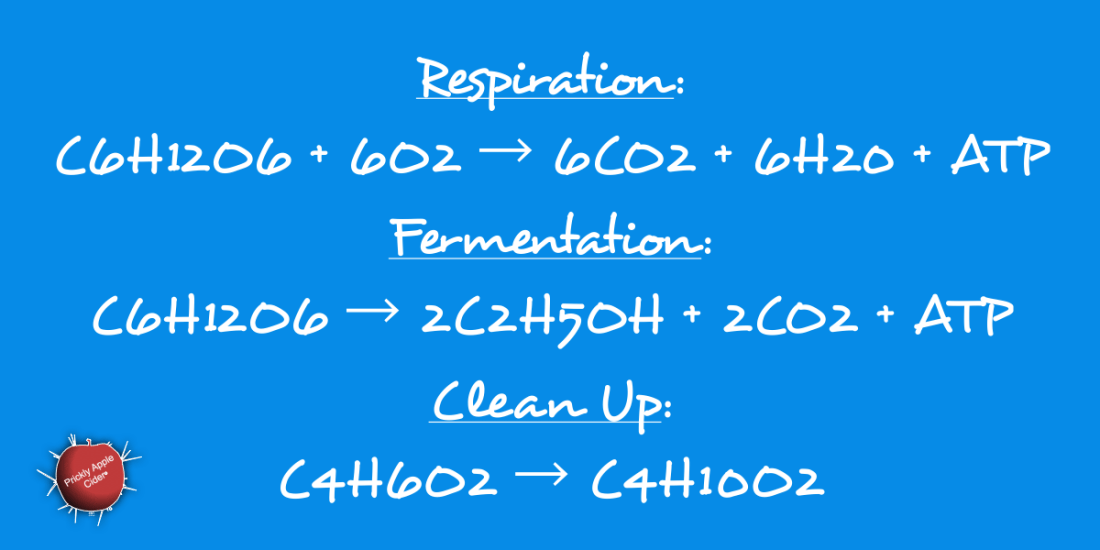
Headspace is the amount of air or open space you have in your container above the liquid. A common question when making cider is how much headspace should you have in your fermenter for primary fermentation? The next question is usually how much you should have when aging your hard cider. There are several considerations … Continue reading The Headspace Conundrum
Tag: Fermentation
Fermentation Stages of Yeast
It is common to talk about fermentation in stages and often there are three stages identified. If you are talking about a wild or natural fermentation, those stages might be how initially non-Saccharomyces strains start the fermentation. This is followed by Saccharomyces yeast that complete fermentation. The final stage is maturation where Brettanomyces strains often … Continue reading Fermentation Stages of Yeast
Cider Words: Glucophilic & Fructophilic
Glucophilic and Fructophilic An interesting aspect about yeast is the preference it has for types of sugar. Most yeast prefer glucose so they are what is called glucophilic. The most common fermentation yeast, Saccharomyces cerevisiae, used for wine, beer, and bread is generally glucophilic. While many strains are capble of processing glucose snd fructose, some … Continue reading Cider Words: Glucophilic & Fructophilic
Yeast Starter for Cider
A yeast starter is used to increase the biomass of a yeast and to ensure the yeast cells are healthy and ready to ferment. It is how you grow more yeast cells to ensure you have enough for a robust ferment and to ensure the yeast cells you are using are healthy and full of … Continue reading Yeast Starter for Cider
Cider Words: Autophagy
Autophagy: The process where yeast begin consuming themselves in order to stay alive during times of starvation. Have you ever heard of autophagy before? No? Don’t worry, I had never heard about it until I read chapter two of Molecular Wine Microbiology(1). Autophagy is strongly linked to autolysis, which I covered in an earlier Mālus … Continue reading Cider Words: Autophagy
Yeast Propagation for Cider
Whether you use commercial yeast or wild yeast, you really should be thinking about yeast propagation. Yeast propagation is the process of taking a small yeast sample, usually from a plate or slant and growing it until you have enough to pitch into your juice to make cider. You might be thinking, that sounds like … Continue reading Yeast Propagation for Cider
Cider Words: Yeast
Words related to yeast and their impact on hard cider When making hard cider, the yeast you are using is a critical component. Therefore, I thought a great “Cider Word” article would be to review some of the key but uncommon words that describe the science around how the yeast in your cider works. Familiarizing … Continue reading Cider Words: Yeast
Acetic Acid: How Cider Becomes Vinegar
Can hard cider go bad? You know, can cider spoil? I often see posts about someone who found an old bottle of cider they forgot and the question often asked is whether it’s safe to drink. The answer is usually, yes, it’s safe to drink. That is because hard cider won’t really spoil, it simply … Continue reading Acetic Acid: How Cider Becomes Vinegar
Alternative Cider Yeast: Pichia kluyveri Overview
Pichia kluyveri is found on many types of fruit but also on the fleshy part of the plant(1). Several isolated strains came from prickly pears in Arizona and California, which I appreciate given where I currently live. However, it was also isolated from olives and is very common on apples as well as coffee. It … Continue reading Alternative Cider Yeast: Pichia kluyveri Overview
Decoding Yeast Genes: Fermentation Characteristics
Key Genes for Fermentation Why do some yeast die during fermentation or only ferment certain types of sugars? Have you ever thought about why some yeast produce hydrogen sulfide (rotten egg smell) and others don’t? It’s all in the genes. As discussed in other Mālus Trivium posts, the Saccharomyces cerevisiae yeast DNA genome was sequenced … Continue reading Decoding Yeast Genes: Fermentation Characteristics