Cider Facts: Sugar and Acetic Acid

Mālus Trivium Page Top

Sugars impact on acetic acid production in wine. Did you know that the amount of sugar in your juice can impact the amount of acetic acid produced. As noted in the Handbook on Enology(1), wines with higher specific gravity produced more acetic acid when fermented with Saccharomyces cerevisiae yeasts. As shown in the above chart, … Continue reading Cider Facts: Sugar and Acetic Acid

Cider Words: Chemoorganotroph

Mālus Trivium Page Top

Chemoorganotroph: Creating energy from organic compounds. You must wonder where I find some of my cider words, especially a word like chemoorganotroph. It sounds made up, but I promise that it’s not. I was reading the Handbook of Enology Volume 1 (1), when I came across this gem of a word. The book highlighted how … Continue reading Cider Words: Chemoorganotroph

Cider Words: Transamination

Mālus Trivium Page Top

Transamination: A binding of amino groups to form new aroma compounds. If you are like me, you’re probably wondering how to say it let alone what it is. But, transamination is one of the most important and positive chemical reactions that can happened to your cider. It involves the transfer of an amino group from … Continue reading Cider Words: Transamination

Cider Words: Pommeau

Mālus Trivium Page Top

Types of Cider Drinks Just like wine, you can distill cider into a spirit. Please recognize that this process is illegal in many countries without a specific license. This is because it can be dangerous. One reason is because of the method, heating a flammable liquid, often over an open flame, and the other is … Continue reading Cider Words: Pommeau

Cider Words: Interactomics

Mālus Trivium Page Top

Systems Biology: Interactomics Yeast were first identified by Pasteur around 1860 and the isolation and propagation of Saccharomyces cerevisiae soon followed. However, for over a hundred years, yeast were mostly isolated from wild fermentations and propagated based on their fermentative and organoleptic properties. Not until the 1990’s did we really start breeding or mutating yeasts … Continue reading Cider Words: Interactomics

Cider Words: Enzymes

Mālus Trivium Page Top

Enzymes commonly found in cider and perry. Enzymes are proteins that act as catalyst for chemical reactions. In cider making, they can enable or speed up these reactions. This enzymes can improve clarification, increase juice yield, extract color, enhance aroma and flavor, and stabilize your cider(1). They can also improve the nutritional characteristics of foods … Continue reading Cider Words: Enzymes

Cider Words: Polymerization

Mālus Trivium Page Top

Tannin Polymerization Polymerization can be a key part of the aging process for cider. It is a chemical process in which the tannins found in the cider combine to form larger and more complex molecules. This process is enabled by oxygen through oxidative coupling. Tannins are found at higher concentrations in apples known as bitters, … Continue reading Cider Words: Polymerization

Cider Question: How to make sweet hard cider?

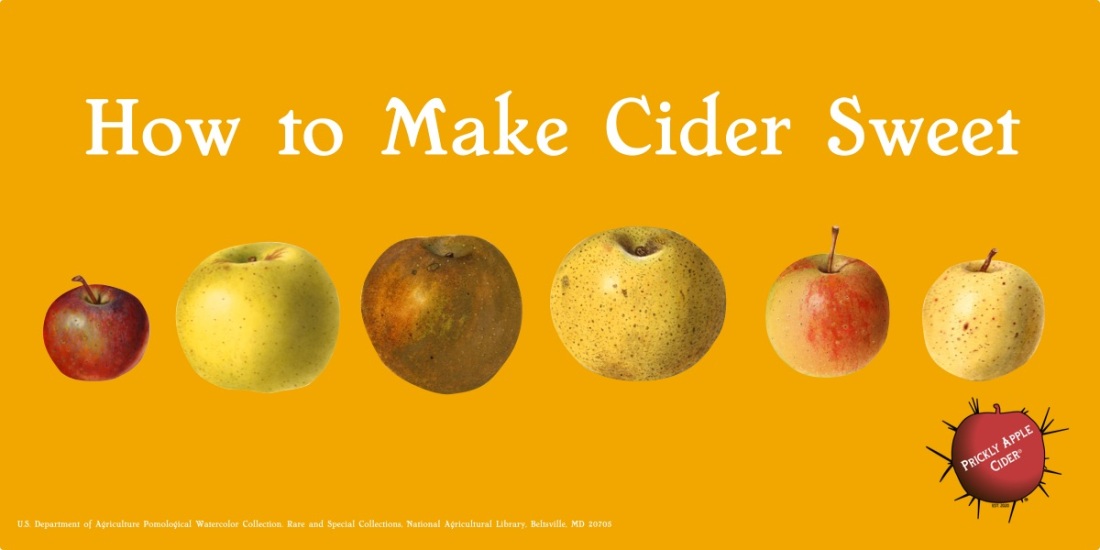
How to make cider sweet

Cider or what some call hard cider is normally dry, which means it has little to no sugar remaining. This is because apple juice has about half the sugar that grape juice has and is often made with yeast (Saccharomyces cerevisiae) used for wine. The result is that when fermentation completes, you are likely to … Continue reading Cider Question: How to make sweet hard cider?

Cider Question: How to measure %ABV?

What’s the best way to estimate the %ABV of cider?

The simple answer to how you measure the percent alcohol by volume (%ABV) of your cider is that you subtract your final specific gravity (FG) from your original specific gravity (OG) and multiple this number by 128. The best equation for calculating hard cider %ABV If you’ve read some of my other articles, you probably … Continue reading Cider Question: How to measure %ABV?

Cider Question: Do I need to use Campden (sulfite)?

Sulfite addition to cider

The simple answer is “no”. Campden, potassium metabisulfite, sulfite, sulphite, or whatever name or compound you use, it is not needed. This is especially true if you are unsure why you are adding it. As a general rule, if you don’t understand why you are adding something to your cider, don’t add it. This is … Continue reading Cider Question: Do I need to use Campden (sulfite)?