Cider Question: Can I use apples with worm holes?

Damaged Apples and Hard Cider

If you are like me, you are interested in trying different apples but more importantly, you’re interested in cheap apples. Those may come from a backyard or roadside tree or even from an orchard. Often, they are damaged either from insects or weather, like hail. This inevitably leads to this week’s Cider Question about whether … Continue reading Cider Question: Can I use apples with worm holes?
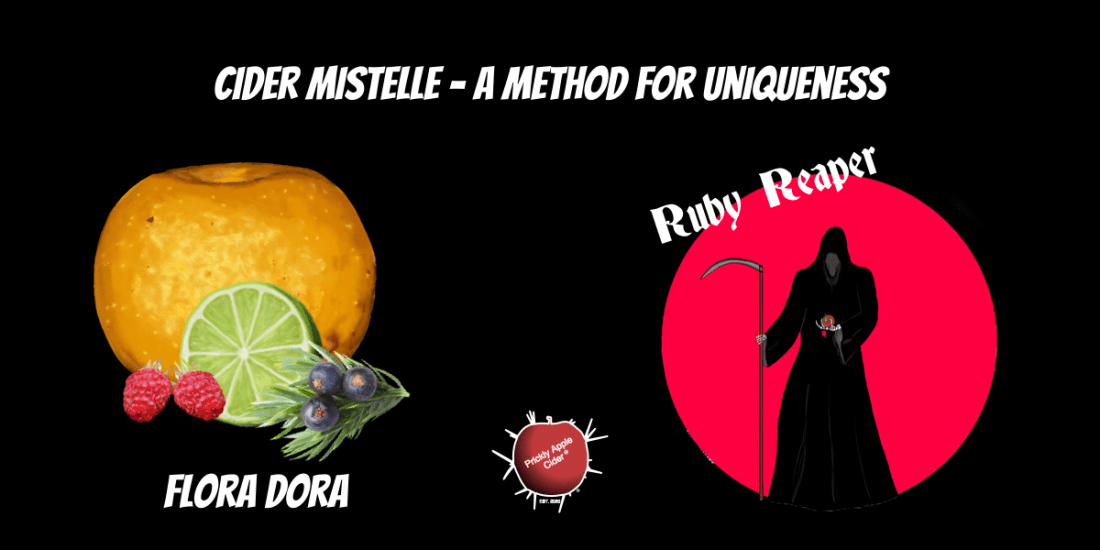
Cider Mistelle: A Method for Unique Ciders

Cider Mistelle - A Method for Unique Ciders

Have you ever heard of a mistelle? I hadn’t until I was doing some research on pommeau, which is a drink made by blending calvados and apple juice. Calvados is apple brandy, also called applejack in the United States. It is basically cider that has been distilled into a spirit or liquor. If you look … Continue reading Cider Mistelle: A Method for Unique Ciders

Cider Fundamentals: Sugar

Cider Fundamentals - Sugar

Sugar is a fundamental element of making hard cider. Without sugar, yeast couldn’t ferment juice and produce ethanol so we wouldn’t have cider. We also wouldn’t have vinegar because vinegar is formed from the ethanol produced by the sugar. Isn’t it interesting how a single simple compound can have such a dramatic impact on human … Continue reading Cider Fundamentals: Sugar

Drinking Cider: Temperature Effect

Temperature Guide for Serving Hard Cider

What is the right temperature to drink a cider? Should it be cold, chilled, warm, or even hot? Yes, you already know my answer, which is that it will depend! Hard cider is not a simple product. In fact, because it’s a relatively young and overlooked beverage in most places around the world, I propose … Continue reading Drinking Cider: Temperature Effect

Cider and Natural Sweeteners

Cider & Natural Sweeteners

The quest for a naturally sweet hard cider is like trying to find a four-leaf clover, something sought by many but only found by a few. There are a number of methods, like keeving and nutrient deprivation, that can be utilized. But, while these work, they are not always the simplest method and may not … Continue reading Cider and Natural Sweeteners

Apple Phenolics: Fuji

Mālus Trivium Page Top

Phenolic Compounds of Fuji Apples Fuji is such a common apple that unless you live in the historical cider regions of France, England, or Spain, you will probably be wondering if it makes a good cider. It was developed in Japan in the 1930s and is the offspring of the American Red Delicious and Virginia … Continue reading Apple Phenolics: Fuji

Cider Words: Light Struck

Mālus Trivium Page Top

The impact of light on cider. Does light pose a risk to hard cider? Beer is bottled in amber bottles to prevent what is called light struck or skunky beer. This occurs when photosensitive iso-alpha acids form 3-methyl-2-butane-1-thiol (MBT). MBT has a skunk odor. If hard cider includes hops, it can form this fault as … Continue reading Cider Words: Light Struck

Yeast Derivative Products (YDPs) & Aroma

The impact of Yeast Derivative Products on Aroma

Yeast Derivative Products (YDPs) can aid with fermentation by providing nitrogen and nutrients and with clarity by binding with colloidal compounds. But recent research has been focusing on how they can impact aroma. Remember that YDPs are just inactivated yeast developed to provide specific reactionary compounds. YDPs are made by using heat, enzymes, or even … Continue reading Yeast Derivative Products (YDPs) & Aroma

Apple Phenolics: Winesap

Mālus Trivium Page Top

Winesap Phenolic Compounds Winesap is an heirloom apple variety in America and it was the parent of numerous other apples including various Winesap seedlings. Stayman Winesap is an example of a Winesap seedling that is commonly found in the United States. Arkansas Black apples are also thought to be a seedling of Winesap. While originally … Continue reading Apple Phenolics: Winesap

Aging Cider with Oak

Aging Cider with Oak

I did a previous experiment using heavy toasted French and American oak on a cider to see if we could recognize a difference in the aromas. This led to using oak more often and to even start experimenting with different wood, like maple, hickory, and birch. Wood is a great adjunct for cider. Besides adding … Continue reading Aging Cider with Oak