Cider Quiz Answers: Question #10

Cider Quiz Answers

Spoiler Alert: If you haven’t taken Cider Quiz #1, click here to take it before exploring the answers. Question #10, the final question in the quiz, is at the root of both challenges and opportunities for the cider maker as it explores the difference between hard cider and wine. You will find various articles about the uniqueness … Continue reading Cider Quiz Answers: Question #10

Cider Quiz Answers: Question #6

Cider Quiz Answers

Spoiler Alert: If you haven’t taken Cider Quiz #1, click here to take it before exploring the answers. I included links to various articles about the methodology for estimating the %ABV of your cider as well as some of the tools you can use to measure specific gravity.  Question #6: How much sugar is dissolved in your … Continue reading Cider Quiz Answers: Question #6

Cider Facts: Sugar and Acetic Acid

Mālus Trivium Page Top

Sugars impact on acetic acid production in wine. Did you know that the amount of sugar in your juice can impact the amount of acetic acid produced. As noted in the Handbook on Enology(1), wines with higher specific gravity produced more acetic acid when fermented with Saccharomyces cerevisiae yeasts. As shown in the above chart, … Continue reading Cider Facts: Sugar and Acetic Acid

Cider Poll – The Ideal Cider Base

Ideal Cider Base

I often provide information that I have learned from reading research papers or from my own personal experiments. But, I have met many experts on my cider journey and I wanted to find a way to share the collective knowledge we have about cider with the world. “Cider Poll” is my attempt to capture and … Continue reading Cider Poll – The Ideal Cider Base

Cider Question: Should I add sugar?

Sugar And Cider

You may have come across a recipe for making cider that calls for the addition of sugar or maybe you add sugar to your cider. The answer to the question of should you add sugar, varies. Fundamentally, you should never need to add sugar to make cider. In fact, in many countries, the addition of … Continue reading Cider Question: Should I add sugar?

Cider Fundamentals: Sugar

Cider Fundamentals - Sugar

Sugar is a fundamental element of making hard cider. Without sugar, yeast couldn’t ferment juice and produce ethanol so we wouldn’t have cider. We also wouldn’t have vinegar because vinegar is formed from the ethanol produced by the sugar. Isn’t it interesting how a single simple compound can have such a dramatic impact on human … Continue reading Cider Fundamentals: Sugar

Cider Words: Maillard Reactions

Mālus Trivium Page Top

Maillard Reactions Create Color and Aroma In 1912, French chemist Louis Camille Maillard identified a chemical reaction between amino acids and reducing sugars. Amino acids are the building blocks of proteins and reducing sugars are those like glucose, fructose, and sucrose. This is a common reaction in bread and baked foods but also occurs in … Continue reading Cider Words: Maillard Reactions

When are apples ripe?

When are apple ripe?

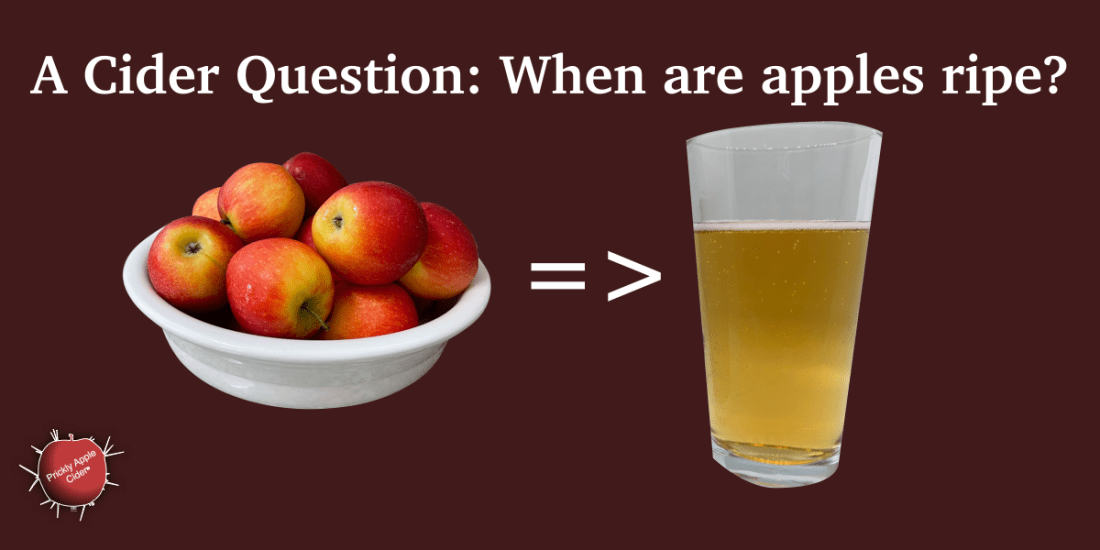
How do you know the apples you are using for hard cider are ripe? Maybe, you would ask me to define ripe. Is ripe defined by the ideal time to harvest an apple, to eat an apple, or to press an apple. We could even consider the question of ripeness for cooking apples. In my … Continue reading When are apples ripe?

Chaptalization and Hard Cider (errr… Apple Wine)

Mālus Trivium Page Top

Chaptalization… It sounds like a complex process with lots of things that could go wrong. However, it’s really quite simple. Chaptalization is the process of adding sugar to juice in order to increase the level of alcohol, %ABV, in the final fermented product. You may have noticed that I didn’t say it’s the process of … Continue reading Chaptalization and Hard Cider (errr… Apple Wine)

Key Carbonation Numbers

Mālus Trivium Page Top

Key numbers to remember regarding carbonation While some people enjoy their hard ciders still or without much noticeable carbonation, others enjoy some bubbles or even sparkling. The fermentation process under open atmospheric conditions at 21C (70F) will naturally have around 0.85 volumes CO2. You may remember from my Mālus Trivium on Volumes CO2 that the … Continue reading Key Carbonation Numbers