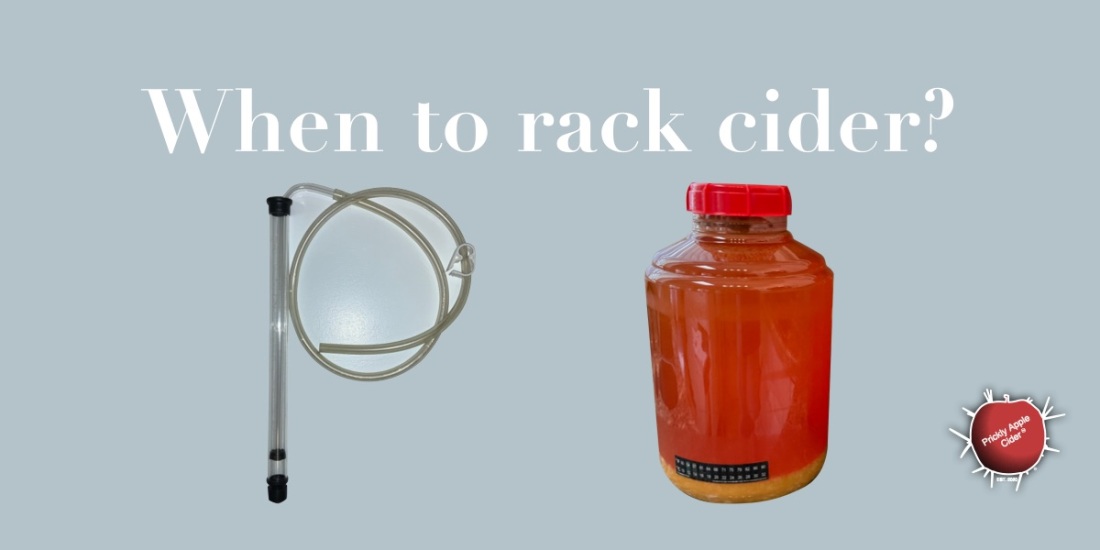
Racking your hard cider simply means to siphon off the cider leaving the bottom layer of sediment behind. To answer the question of when you should rack your cider, I first need to review the definition of sediment and lees. Apple juice contains a variety of organisms and compounds. Many of these precipitate or drop … Continue reading Cider Question: When should I rack my cider?
Category: Mālus Trivium
Cider Question: Can hard cider go bad?
When people ask if their hard cider can go bad, they are often worried that it might spoil or turn into something that would make them ill. Usually, the cider in question is often sitting in a bucket and has a crust of white or even a moldy film or layer on top of it. … Continue reading Cider Question: Can hard cider go bad?
Cider Question: Do I need to use yeast nutrient?
Many cider recipes call for the addition of yeast nutrient when adding yeast. Do you really need to add yeast nutrient to make cider? The short answer is no but, as you might expect, there are always details and nuances involved when answering most questions about cider. The need for yeast nutrient is usually a … Continue reading Cider Question: Do I need to use yeast nutrient?
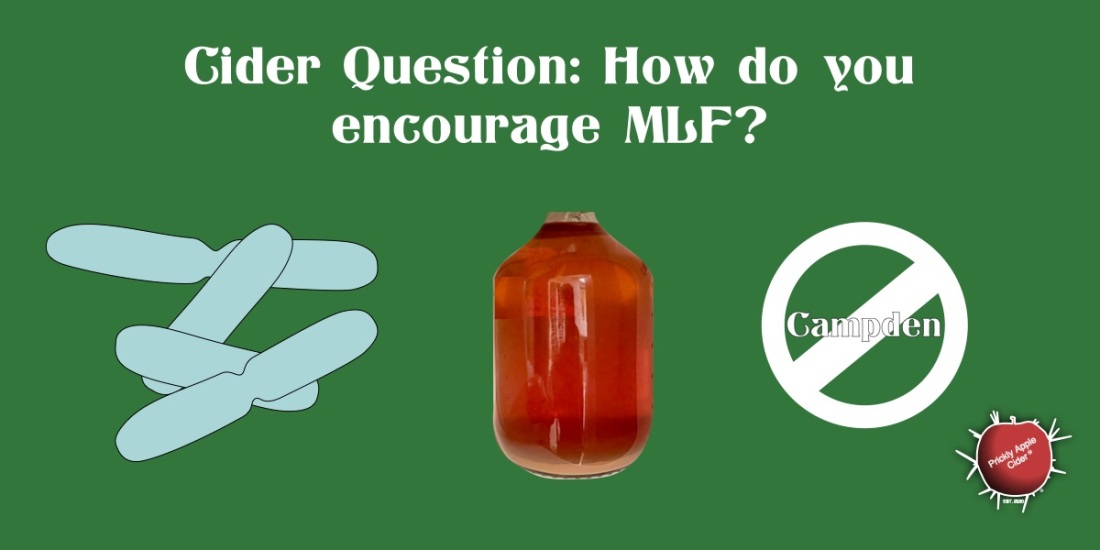
Cider Question: How can I encourage Malolactic Fermentation (MLF)?
Malolactic fermentation (MLF) is a process that usually occurs after primary or alcoholic fermentation completes. Fundamentally, it’s the conversion of malic acid to lactic acid. Malic acid is more acidic compared to lactic acid so MLF reduces the acidity of your cider. Other reactions that impact aroma also occur. Diacetyl creation is one of the … Continue reading Cider Question: How can I encourage Malolactic Fermentation (MLF)?
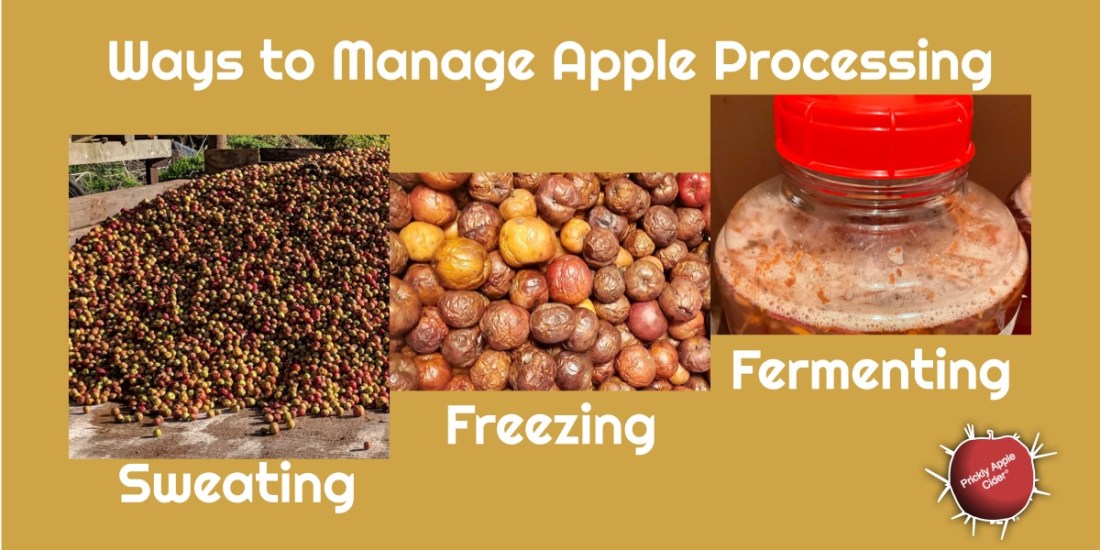
Cider Question: How can I delay processing my apples?
Things happen and you aren’t always able to process all the apples you need to fill your fermenter. For example, not all apples ripen at the same time. In fact, a single tree may take weeks to ripen all the apples on it. Maybe your grinder or press broke or you picked more apples than … Continue reading Cider Question: How can I delay processing my apples?
Cider Question: Can I use apples with worm holes?
If you are like me, you are interested in trying different apples but more importantly, you’re interested in cheap apples. Those may come from a backyard or roadside tree or even from an orchard. Often, they are damaged either from insects or weather, like hail. This inevitably leads to this week’s Cider Question about whether … Continue reading Cider Question: Can I use apples with worm holes?
Cider Words: Yeast Regulation
Yeast Regulation: Upregulating and Downregulating Yeast are single cell organisms that are seeking to survive and thrive in whatever environment they find themselves. As a single cell organism, we might be inclined to think of them as simple but, that would be a mistake. Yeast have a vast amount of processes they perform to live … Continue reading Cider Words: Yeast Regulation
Aroma Faults: Diacetyl
Cider Aroma Faults: Butter Sometimes too much of a compound is the cause of a fault. Other times, the definition of whether its a fault depends on the beverage. Diacetyl (C4H6O2) is an example of such a compound. In most beers, it’s considered a fault but, in most California chardonnays, it’s desired. Butter is the … Continue reading Aroma Faults: Diacetyl
Cider Words: Yeast Morphology
Yeast Morphology: Common Yeast Shapes Morphology simply means the form or structure of a plant or organism. Yeast morphology in this context is the shape of yeast cells. You may be surprised to learn that not all yeast cells are shaped the same. As a cider maker, if you assess your yeast under a microscope, … Continue reading Cider Words: Yeast Morphology
Aroma Faults: Solvent
Cider Aroma Faults - Solvent or Vinegar Some compounds contribute positively, initially. But, if there is too much, they quickly become faults. Ethyl acetate (C5H8O2) is an example of such a compound. In low quantities, it can contribute to the aroma of a cider but in large quantities, it becomes a fault. It will turn … Continue reading Aroma Faults: Solvent