As I noted in an earlier post on Rosé ciders, I was surprised to find so many during a visit to Normandy, France. I even saw some of the red-fleshed apples, which they use, growing in an orchard. Red or pink fleshed apples are a great option for making a rosé. However, if you are like me and lack a source for red-fleshed apples, you can still make a rosé by using the peels from red apples. I prefer the peels from Arkansas Black apples because they have such a deep hue. However, there are many readily available “red apples” that can be used. Red Delicious peels are common the world over and work well. Other slightly unique varieties like Black Oxford, Chieftain, or some ripe Idared or Macintosh apples would also work. Just pick the ones with less green or yellow showing.
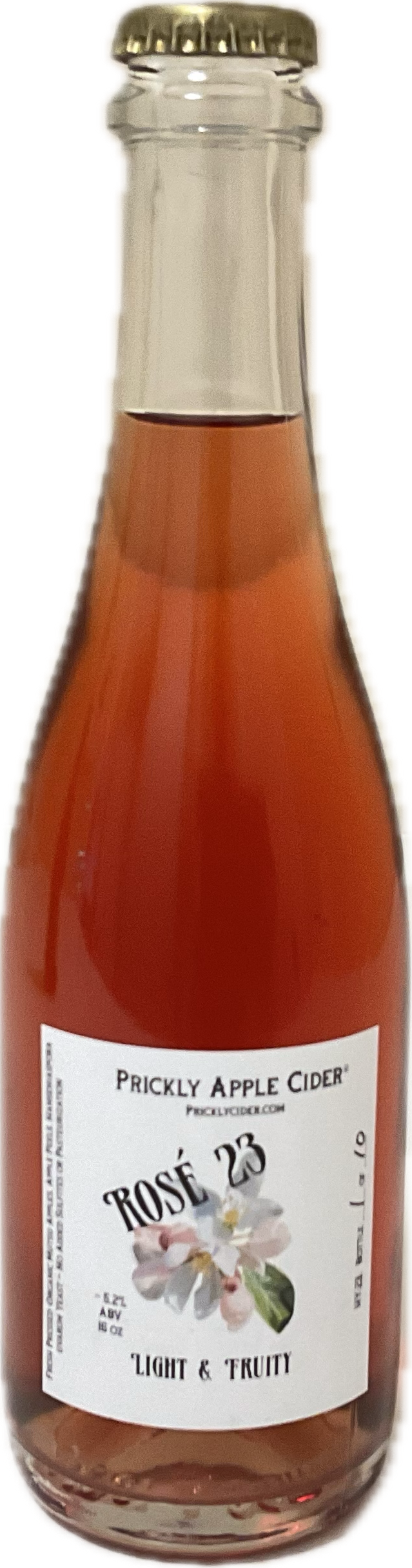
For this recipe I used a single variety juice from Mutsu apples, also known as Crispin apples, but augmented it by including Arkansas Black peels to create the pink color I wanted. The color comes from anthocyanin compounds, which are a type of phenolic compound, that make the peel red. These are a type of soft tannin and they are not bitter but astringent. I find Mutsu can make a nice single variety cider. I have used it in various recipes. It is not exceptionally acid or phenolic while specific gravity, for me, tends to be in the high 50s (1.055-1.060). If you do not have Mutsu apples, look for a similar apple with a pH around 3.5-3.6.
The other key component in any cider is yeast. I have been using non-Saccharomyces strains because they ferment slower, tend to leave more residual sweetness, and produce excellent aroma profiles. I selected Pichia kluyveri, strain Y-17728 from the USDA culture center. It produces a fruity aroma and also tends to leave a few points of residual sweetness with only a little work. I use a Fermonster for my fermentation and kegs to manage the aging process. You can find links and references to my equipment on my Product Recommendation Page. I make a small commission for any referral if you use my link, but you do not pay more for the product.
Here’s a link to the recipe as well as the Prickly Cider recipe page where I list many of my recipes. If you have questions, leave a comment or send me an email.
If you are looking for other cider and food recipes, check out my book, The Art & Science of Cider. It’s a great resource and guide for developing your cider making process. You can find it globally at the following links.
United States Links
United Kingdom Links
Other Country Links
Interested in similar cider recipes, check out theses.
Making Ruby Reaper Cider Mistelle
There are many different types of fortified wines. The process consists of adding spirits to wine often during fermentation to stop the process by raising the alcohol level. In my book, I talk about three main style categories for hard cider: Traditional, Adjunct, and Dessert. This last category is where this recipe fits, even though…
A Study in Color: Making Cider Silver
In my original post on the color of cider, I asked the question what color hard cider should be. I described cider in the context of wine. Should cider be white and red or something different. I did this because in both cases, you are using fruit juice. While there are some natural variances in…

The Color of Cider
If I asked you to define the color that hard cider should be, what would answer? I’m not talking about an adjunct hard cider, but a tradional hard cider made from apples or pears. Would you tell me it should be a dark amber? Should it be a golden hue? What about a yellow so…

Exploring the Colors of Hard Cider
I’ve talked about the color of hard cider and how the process for making wine can be used as a reference. This is because like wine, cider color can be influenced by the fruit as well as the process. In another post on hard cider color, I explored how to make what I call silver…
 PricklyCider.com