Which is more important when making great cider, the apple varieties you use in your juice blend or the yeast you use? It’s not an easy question to answer. If I asked whether the apples were more important than the shape of the fermenter, most of us would probably say the apple. I recognize that the shape of your fermenter does impact how your cider turns out. But, that is another article for another time. Ultimately, apples and yeast are at the top of the list when you consider what factors can most influence the quality of your hard cider.
To explore which is more impactful, we first need to define what we mean by quality relative to cider. That is because not everyone has the same opinion on how hard cider should taste. Not everyone thinks cider should be still, have a dark amber color, and be full of tannins. Some people like a pale cider that is tart and carbonated. Some even like cider that has aromas of citrus, pineapple, and banana. The world is full of people who have different tastes and those tastes definitely extends to cider. If you don’t believe me, just compare a “standard” cider from the three oldest cider producing countries. Taste a farmhouse cider from Somerset, a keeved cider from France, and a “sidra natural” from Spain. Each are considered the best ciders in the world by groups of people, yet each are vastly different. Imagine when you start adding new markets like America, India, Sweden, Australia, Brazil, and others that are just starting to explore cider. It highlights the impact that the apples and yeast have on the final results. Let’s explore the key elements to help you decide which you think is more important.
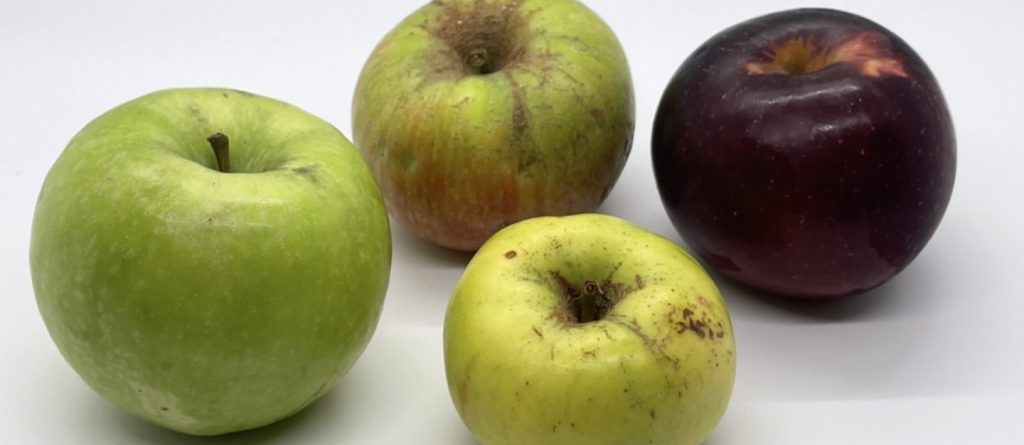
Apples
The apples you use define several fundamental characteristics of your cider. First, it defines the sugar level or dissolved solids. This is commonly measured in specific gravity or Brix. It’s key because it defines the maximum potential alcohol you can produce. For cider, subtracting the final specific gravity reading from the beginning specific gravity reading and multiplying by 128 is a good way to estimate the percentage of alcohol by volume you created. Yes, you can chaptalize your juice by adding sugar or honey but in most countries, that makes the product a wine and not a cider. It also also dilutes the apple characteristics in your cider.
Besides the sugar level, apples also define the acid level in your cider. This is mostly malic acid but there are a variety of acids found in apples and the apple variety and maturity have a big impact on those levels. Acids are important because they create an organoleptic balance to sugar and tannins. They are also key compounds in creating aromas and flavors as they can be precursors to the creation and development of many aroma forming reactions. Without the acids, the cider will lack nose, body, and finish.
Another key compound that apples provide is phenolics. These include common compounds like tannins and anthocyanins that add bitterness, astringency, and color. Phenolic compounds provide balance against acids and sugar that can be found in cider. Apples varieties are classified as Sweets, Bitters, and Sharps, which help cider makers select apples for juice blends. You can mix apple varieties that are low in tannins or acids with those that are high in tannins and acids. However, apples are more complex and nuanced than just sugar, acids, and tannins. They provide other compounds critical to making a quality cider.
These compounds include volatile aromas, aroma precursors, and nutrients that enable fermentation. This includes nitrogen as well as vitamins, minerals, and other nutrients. Many of these compounds, like amino acids and polysaccharides, provide nutrients as well as aroma precursors. The apple variety, the orchard practices, and the weather all impact these various compounds and ultimately, what aromas can be developed. These aromas must be unlocked during the fermentation process, which brings us to the other critical factor in making hard cider.

Yeast
Without yeast, there would be no cider. Yeast convert the sugar into alcohol and carbon dioxide (CO2) and they do this by utilizing the nutrients found in the juice. While creating alcohol and CO2 is critical for cider production, it is really the creation of aromas and flavors that defines the quality of the cider. Ethanol, which is the largest type of alcohol produced during fermentation, is not really unique. Its chemical formula is C2H6O and like carbon dioxide (CO2), all yeast will make it. Different yeast can be more or less efficient at making it, but the ethanol and CO2 made by Saccharomyces cerevisiae isn’t fundamentally different in quality to that made by Lachancea thermotolarens. You can trace the origin of the alcohol that is created based on the sugar source (apple juice versus cane sugar) but the ethanol produced doesn’t impact the quality.
The quality of your cider is defined by all the other compounds that are created during fermentation. These are the fusel or higher alcohols, the esters, the polyols, the acids, and other volatile compounds and precursors to these volatile compounds. Every yeast strain has a unique genetic makeup. Those genes define the potential pathways that can be utilized based on the juice characteristics. These pathways are what define a yeast’s ability to process the sugar that is available. The nutrients in the juice along with the environmental conditions like temperature and continued availability to oxygen, will define the pathways that yeast utilize to process the available sugars.
Yeast that are more sensitive to ethanol will likely produce more glycerol and less ethanol. Glycerol can produce sweetness and improve mouthfeel. It can also lead to more acetic acid production. A yeast’s preference for nitrogen can result in it breaking down different amino acids and polysaccharides, even when another more readily available source of nitrogen is present. This results in different esters and volatile compounds being produced. Even those esters and volatile compounds can in turn be lost depending on the rate of fermentation and the amount of CO2 produced. Even the environmental characteristics like temperature, oxygen availability, and even the shape of your fermenter will impact the yeast. The yeast you use will respond to its environment based on its genetic characteristics. It defines the pathways that are available and preferred. It is the amount and types of compounds like glycerol, acetic acid, esters, and volatile compounds the yeast produces that define the quality of your cider.
In my view, the importance of the apple or the yeast is just like the classic question of which came first, the chicken or the egg. Without the apples providing the sugars and compounds, yeast wouldn’t have the needed resources to reproduce and create cider. However, without yeast, you can’t create cider and without an understanding of the yeast you use, you can’t fully understand the quality of cider you will produce. Which is more important? You tell me. I can’t decide.
Did you enjoy these tips on making hard cider? Check out my book to learn more ideas and information on making and enjoying hard cider. It will help you develop a process that matches your desire and equipment. It will also show you how to pair cider with food to maximize your experience. You can find it as an eBook and a 7×10 paperback on Amazon or a 7×10 paperback on Barnes & Noble. Click on these Links to check them out.
United States Links
United Kingdom Links
Other Country Links
Other related posts by PricklyCider.com that you might enjoy.

Non-Saccharomyces Yeast Tips
This page is dedicated to tips and information about yeast and the fermentation of hard cider. Scroll down for a list of these hard cider making tips or use the…

Common Questions
Welcome to Cider Questions, a page in PricklyCider.com dedicated to answering commonly asked questions about hard cider. Don’t see your question? Search the entire site or Ask a Question directly…
Cider Yeast
Cider yeasts are the kind of yeast found naturally on the apple. However, the challenge is how to control and repeat your fermentation process each year. The variety and quantity…
Aging, Color, and Maturation Tips
This page is dedicated to tips and information about aging, color, and maturation of hard cider. Scroll down for a list of these hard cider making tips or use the…
 PricklyCider.com
“the shape of your fermenter does impact how your cider turns out”
I’ve not heard that before – that indeed would be an interesting topic.
LikeLike
Okay… I’m going to have to finish that article I started! 😁
LikeLike